
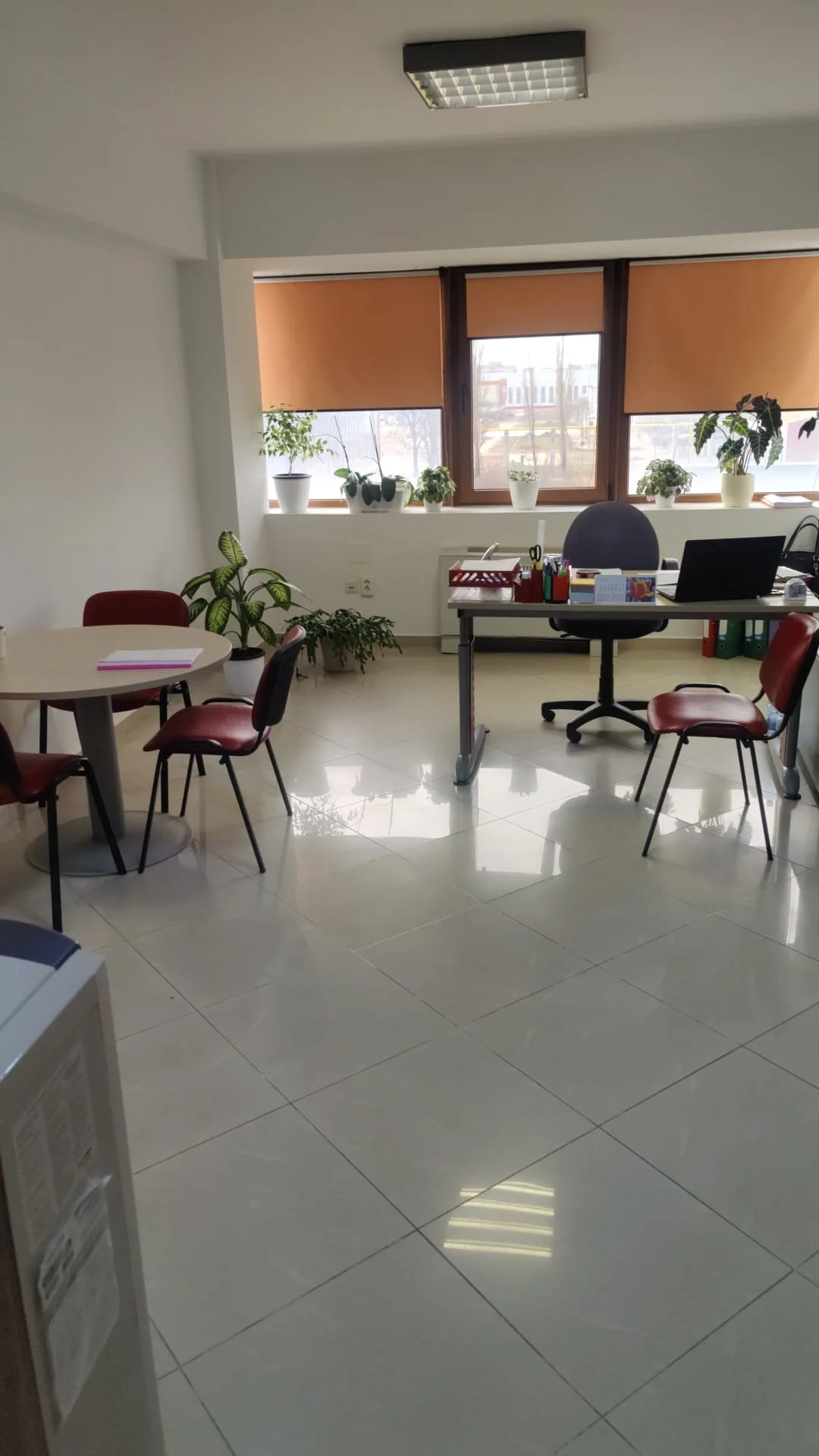
Office space in the Basarabia – Republica portfolio.
What an office really costs: calculating total occupancy cost
A practical way to compare office offers: separate monthly running costs, move-in cash, fit-out and the obligations at the end of the lease.
The advertised rent does not tell you how much an office will cost to occupy. To compare two offers, separate the monthly running cost, the cash needed before moving in, fit-out spending and obligations when the lease ends. Each affects the budget differently.
A lower base rent may come with more work before occupation or fewer included services. A higher rent may cover a space that already suits the team. The useful comparison starts with the same information from both landlords.
Four parts of the budget
- Recurring costs: base rent, management or service charges, utilities and parking where charged separately.
- Move-in cash: deposit, advance payments, initial invoices and work needed before occupation.
- Costs during the lease: contractual rent adjustments, agreed repairs and changes to the layout or equipment.
- Exit costs: cleaning, repairs, removal of tenant installations and any agreed reinstatement.
Keep an estimated monthly budget and a whole-lease cost calculation. Track the refundable deposit separately as cash tied up: adding it as a permanent expense would overstate the cost if it is returned in full. Likewise, an advance rent payment is an earlier payment of rent, not an extra month's cost to count twice.
Check which area is being charged
A rate per square metre needs a clearly defined area. Ask whether the quoted figure refers to usable space, a contractual chargeable area or an area that also includes an allocation of common parts.
Request the floor plan and the area used on the invoice. For a total monthly offer, confirm the rooms and ancillary spaces included. Do not assume that two adverts showing the same floor area use the same measurement basis.
Monthly costs beyond rent
Service charge and building management
Ask for the services covered, the billing method and any reconciliation against actual spending. Common-area cleaning, security or maintenance may be included in a service charge, included in rent or billed separately. A service present in the building is not necessarily included in your offer.
Utilities and air conditioning
Check how electricity, water, heating and cooling are metered and allocated. Ask whether air conditioning outside normal hours creates an extra charge, and request available consumption records for the space. Teams working long hours or using substantial equipment should compare operating assumptions as well as rates.
Internet, security and access
Confirm the available providers, cabling, access outside working hours and arrangements for visitors. Record whether reception, security and access cards are included, optional or charged separately.
Parking
Request the number of spaces that can be allocated, the price, the allocation period and visitor arrangements. If parking is essential, include it in the initial brief and comparison table.
VAT, currency and rent adjustments
Compare offers in the same currency and on a consistent VAT basis. Ask what each quoted amount includes, the invoicing currency and any conversion rule.
For rent adjustments, request the contractual formula, the first adjustment date and the frequency. Keep unresolved amounts visible in the budget instead of treating them as zero. Have the company's accountant or legal adviser review the treatment of the actual offer where needed; the comparison table itself does not determine tax or contractual obligations.
Cash needed before occupation
Deposit and advance payments
Confirm the amount and form of the deposit, what it secures and the conditions for its return. Ask for a complete schedule of payments due at signing, including the first rent payment, any service charges and parking.
Fit-out and furniture
Establish what will be handed over: partitions, lighting, data connections, furniture and equipment. Request current photos, a plan and an inventory. For any works, clarify who approves them, who pays, the likely programme and what must be removed at the end.
Consider a hypothetical comparison. Office A has a lower base rent but needs partitions and furniture. Office B costs more each month but is already close to the team's required layout. To choose between them, compare fit-out costs, time until occupation, monthly running costs and the planned lease term. The lower rent could still be preferable, but the initial investment needs to fit the company's budget.
Read the handback terms early
Ask what condition the space must be returned in, how alterations are treated and who pays for cleaning, repairs or removal of cabling. Check the inspection process, inventory and deposit-release arrangements.
Record the initial condition with a handover document and photographs. This provides a reference for estimating and discussing the work required at the end of the lease.
A comparison table for two offices
Use the same time period, currency and VAT basis for both columns. Write “unconfirmed” where information is missing.
| Component | Offer A | Offer B | What to confirm |
|---|---|---|---|
| Chargeable area | — | — | Measurement basis |
| Base rent per month | — | — | Currency, VAT, start date |
| Service charge per month | — | — | Included services and reconciliation |
| Estimated utilities per month | — | — | Metering and usage assumptions |
| Internet, security, reception | — | — | Included or separate |
| Parking per month | — | — | Number of spaces and terms |
| Estimated recurring monthly total | — | — | All components confirmed |
| Refundable deposit | — | — | Cash required and return conditions |
| Payments at signing | — | — | Avoid double-counting advance rent |
| Fit-out and furniture | — | — | Scope, approvals and timing |
| Estimated exit costs | — | — | Required handback condition |
| Total cost over the lease | — | — | Adjustments and variable costs |
Begin the whole-lease calculation with the monthly total multiplied by the number of months. Add non-recurring fit-out and estimated exit costs, then account for contractual adjustments and variable usage. Show cash held as a refundable deposit separately.
Questions to send before a viewing
- What is the base rent and which area is charged?
- What is included, and what VAT treatment is quoted?
- Which recurring costs are billed separately?
- How are utilities metered and service charges reconciled?
- What are the access hours, parking arrangements and internet options?
- What is due at signing, including the deposit?
- What remains in the office at handover, and which alterations are permitted?
- How can rent and other charges change during the lease?
- What must be repaired or removed at the end?
Use the answers to remove offers that fail essential requirements, then arrange viewings for the remaining options. You can start with the office listings in Bucharest. A brief covering floor area, monthly budget, parking and fit-out needs makes the comparison more useful from the first conversation.
Looking for an industrial or commercial space?
Browse our portfolio or contact us directly for a personalized analysis.